Busy season colony size
Bee knowledge
A deeper look inside a honey bee colony
Honey bees survive by working as a superorganism: one queen, thousands of workers, seasonal drones, stored honey, shared signals, and constant care for brood, food, and hive health.
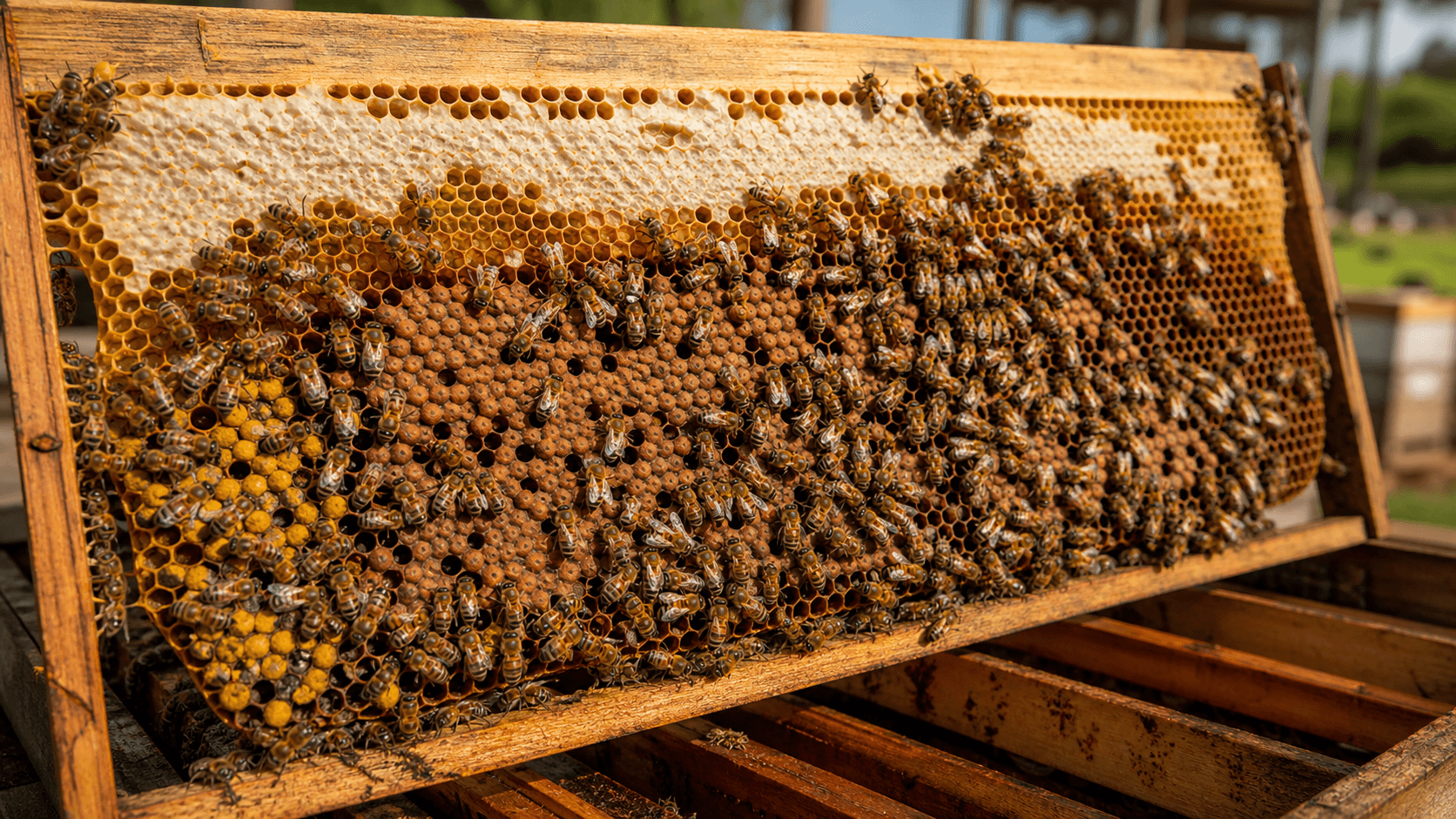
One colony, one queen
Usually 1 queen
The queen is the colony's main egg-layer. Her pheromones help hold the colony together, although short overlaps can happen during queen replacement.
Honey is stored food
Nectar, concentrated
Bees reduce nectar moisture and seal ripe honey under wax cappings for later use.
Colony roles
Queen, workers, and drones each have a different place in the colony
A hive is not a random crowd of bees. Each bee type has a different body shape and purpose, and the balance changes with the season.
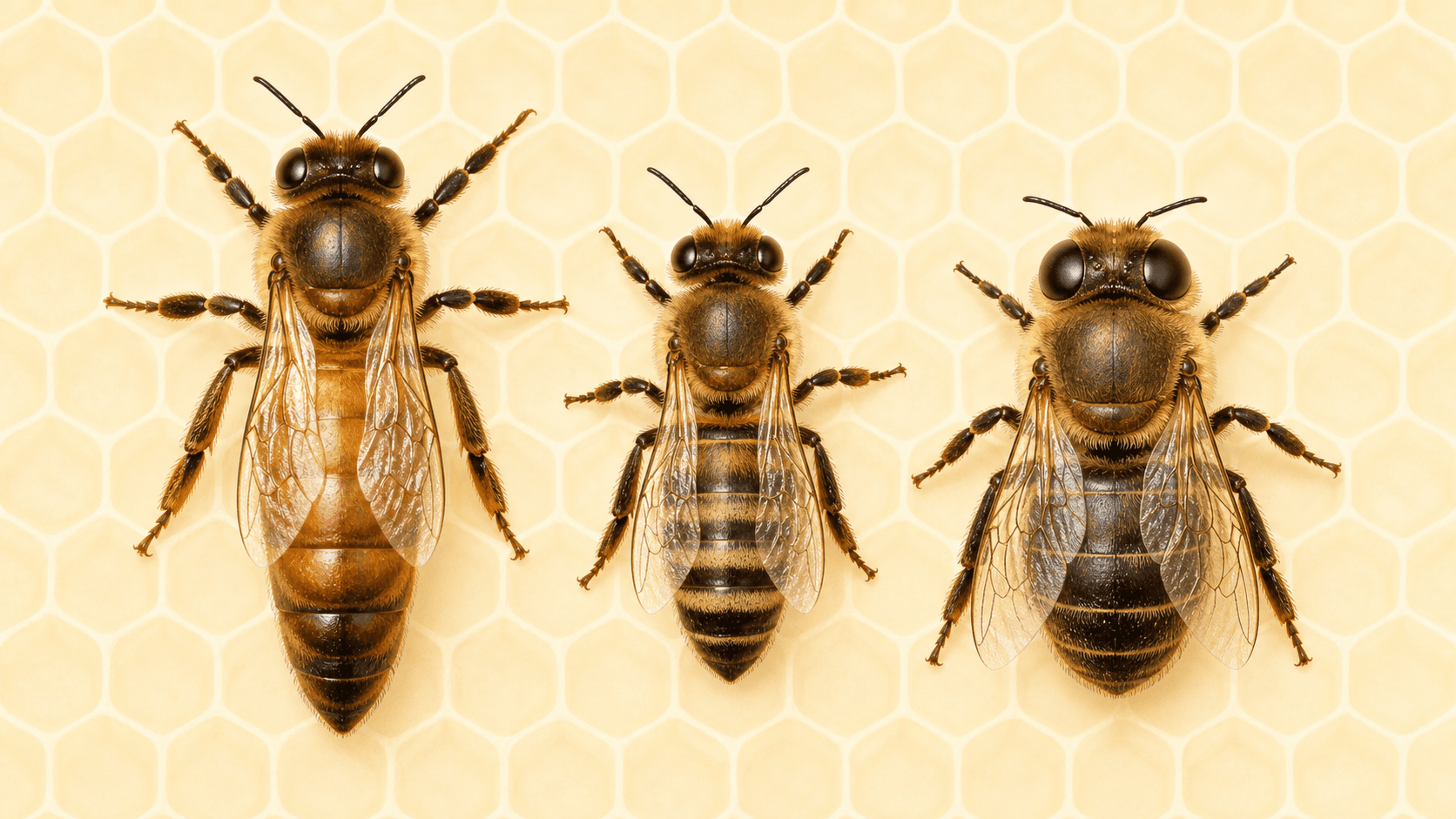
Queen bee
The queen is the mother of the colony and the main egg-layer.
- She has a longer abdomen than workers because her body is built for laying eggs.
- In a strong spring or summer colony, a healthy queen can lay well over 1,000 eggs a day.
- Her pheromones help workers recognise that the colony is queenright and organised.
- She does not control every bee like a commander; the colony works through chemical signals, shared cues, and worker behaviour.
Worker bees
Workers are female bees that run nearly all daily hive activity.
- Young workers clean cells, feed larvae, warm brood, and care for the queen.
- Middle-aged workers build comb, receive nectar, ripen honey, pack pollen, and guard the entrance.
- Older workers usually become foragers, collecting nectar, pollen, water, and plant resins.
- Summer workers may live only several weeks because foraging is demanding; winter bees can live longer.
Drone bees
Drones are male bees whose main role is mating with queens.
- Drones are broader than workers and have large eyes that help them find queens during mating flights.
- They do not collect nectar or pollen, make wax, guard the hive, or sting.
- Colonies raise more drones during the reproductive season.
- When resources become scarce, workers may remove drones from the hive.
Worker life
Worker bees change jobs as the colony needs them
A worker does not hold one job for life. Many tasks roughly follow age, but the colony can adjust when weather, nectar flow, brood, or stress changes.
Cleaning and warming brood
New adult workers clean cells so the queen can lay in them again. Workers also help keep developing brood warm and stable.
Nursing larvae
Nurse bees feed young larvae with glandular food and later provide a mix of nectar or honey and pollen.
Building wax comb
Workers produce small wax flakes from glands on the underside of their abdomen, then shape the wax into hexagonal comb.
Receiving nectar
House bees take nectar from returning foragers, move it between bees and cells, and fan the hive to remove moisture.
Guarding and foraging
As workers age, many shift to guarding the entrance and then foraging outside the hive for nectar, pollen, water, and resin.
Honey and seasons
How bees turn flowers into honey
Honey is concentrated nectar, but the process depends on flowers, weather, bee behaviour, comb space, and careful timing.
1. Bees visit flowers
Foragers collect nectar from flowers in a honey stomach separate from their main digestive system.
2. Nectar is shared
Back at the hive, foragers pass nectar to house bees. Enzymes from the bees begin changing the sugars.
3. Moisture is reduced
Bees spread nectar in cells and fan air through the hive. This reduces water content so the honey keeps well.
4. Ripe honey is capped
When the honey is ready, bees seal the cell with a thin wax capping. Beekeepers look for capped honey before harvesting.
Why honey changes colour and flavour
Honey reflects the nectar source. Eucalypts, clover, garden flowers, weeds, orchards, and native bush can all influence colour, aroma, texture, and taste.
Why colonies build up in spring
When days warm and flowers produce nectar and pollen, the queen lays more eggs and the colony raises more workers.
Why beekeepers leave honey for bees
Honey is the colony's food store. Responsible harvesting leaves enough stores for poor weather, dearth periods, and cooler months.
Why pollen matters
Pollen supplies protein, fats, vitamins, and minerals. Colonies need it most when raising brood.
Bee health
What honey bees are facing now
Honey bees face pests, disease pressure, nutrition stress, pesticide exposure, poor seasons, and movement-related biosecurity risks. Beekeepers help by monitoring, keeping colonies strong, and following current state requirements.
Varroa mite
The challenge
Varroa destructor is a parasitic mite now considered established in NSW. It feeds on honey bees, reproduces in capped brood cells, weakens colonies, and is strongly associated with damaging honey bee viruses.
What beekeepers watch for
- Mites may be seen on adult bees, in drone brood, or on monitoring boards.
- Heavy infestations can lead to patchy brood, deformed wings, crawling bees, reduced colony strength, and colony collapse.
- Because mites are small and often hidden in brood, regular monitoring matters more than waiting for obvious symptoms.
How beekeepers help
- Monitor mite levels using accepted methods such as alcohol or soapy water wash, sugar shake, sticky boards, drone brood checks, and brood inspection.
- Use only registered varroa treatments where treatment is required, and follow label directions and withholding requirements exactly.
- Rotate treatment groups and time treatments carefully to reduce resistance risk and avoid contaminating honey.
- Keep records and follow current state biosecurity requirements.
Brood diseases
The challenge
Brood diseases such as American foulbrood can seriously damage or kill colonies. Some are notifiable and need careful handling because spores or pathogens can spread through brood, comb, honey, tools, and hive equipment.
What beekeepers watch for
- Unusual brood patterns, sunken or perforated cappings, dead larvae, bad odours, or ropey brood are warning signs that need prompt checking.
- Not all brood problems look the same, and early cases can be easy to miss.
- Suspect notifiable disease should be treated as a biosecurity issue, not just a weak-hive problem.
How beekeepers help
- Inspect brood regularly and learn the signs of common and notifiable brood diseases.
- Keep hive tools and equipment clean, and avoid moving suspect comb or hive material between colonies.
- Follow the Australian Honey Bee Industry Biosecurity Code of Practice and current state reporting rules.
- Seek official advice or diagnostic testing when signs are uncertain or serious.
Small hive beetle
The challenge
Small hive beetle is a scavenging beetle pest. Adult beetles hide in the hive, while larvae can tunnel through comb, damage brood and pollen, and cause honey to ferment.
What beekeepers watch for
- Adult beetles may run across comb or hide in corners when a hive is opened.
- Larvae can create slimy, fermented comb and may cause honey to leak or smell sour.
- Weak colonies, excess empty comb, and warm humid conditions can make damage worse.
How beekeepers help
- Keep colonies strong enough to patrol and defend the comb.
- Avoid leaving bees with more comb space than they can cover.
- Use beetle traps or physical controls where suitable.
- Remove dead-outs, burr comb, old scraps, and exposed honey promptly so beetles cannot breed in them.
Pesticide exposure
The challenge
Honey bees can be harmed by some agricultural, garden, and public-land chemical use, especially when products are applied to flowering plants visited by bees or when bees contact spray drift or contaminated water.
What beekeepers watch for
- Sudden piles of dead or dying bees near the entrance can be a warning sign, although other causes are possible.
- Foragers may appear disoriented, trembling, unable to fly, or unusually absent from the hive.
- Low-level exposure can be harder to recognise and may overlap with nutrition, disease, or weather stress.
How beekeepers help
- Place hives with forage, water, and nearby land use in mind.
- Communicate with growers, neighbours, and land managers before spray periods where possible.
- Use tools such as BeeConnected or local notification systems where they are available.
- Report suspected serious chemical incidents through the relevant state process.
Nutrition stress
The challenge
Bees need nectar or honey for carbohydrate energy and pollen for protein. Drought, heavy rain, heat, cold, or lack of flowering plants can leave colonies short of food.
What beekeepers watch for
- Low honey stores, little incoming pollen, shrinking brood nests, or unusually defensive behaviour can point to stress.
- Colonies may stop expanding if the queen lacks food support for brood rearing.
- Weak nutrition can make other pest and disease problems harder for the colony to handle.
How beekeepers help
- Check food stores during inspections, especially before winter or during poor flowering periods.
- Place hives where bees have access to diverse forage and clean water.
- Avoid over-harvesting honey.
- Feed colonies only when appropriate and in line with good beekeeping practice.
Biosecurity and hive movement
The challenge
Pests and diseases can spread through moving hives, bees, brood, comb, honey equipment, or contaminated gear.
What beekeepers watch for
- Some problems are not visible at first, so movement rules and inspection habits are important even when hives look healthy.
- Shared tools, second-hand equipment, and neglected hives can carry risk.
- Reportable pests and diseases must be handled according to state rules.
How beekeepers help
- Register hives and keep clear hive location records.
- Inspect colonies and equipment before moving them.
- Clean tools and avoid swapping contaminated gear between apiaries.
- Follow state movement, reporting, and treatment requirements.
Beekeeper care
Healthy hives are managed, not just watched
Good beekeeping is a mix of observation, timing, hygiene, accurate records, and restraint. The goal is to keep the colony strong while using the least disruptive method that is appropriate for the problem.
- Inspect colonies on a sensible schedule so problems are found early.
- Aim to keep colonies queenright, well fed, and strong enough to cover their comb.
- Match hive space to colony size so pests are not given empty comb to hide in.
- Keep bottom boards, spare boxes, wax scraps, and honey spills tidy.
- Use integrated pest management: monitoring first, cultural and physical controls where useful, and registered treatments when thresholds or conditions call for them.
- Record inspections, pest counts, treatments, hive movements, and unusual signs.
- Follow current NSW and Australian biosecurity guidance because pest rules can change.
Accuracy note
Pest advice changes with location and season
This page is general education for customers. Active beekeepers should follow current NSW and Australian biosecurity guidance, product labels, registration rules, and reporting requirements.